
Your skincare routine hasn't changed. Your products are the same ones you've used for months. But suddenly your skin is red, tight, stinging when you apply moisturiser, and breaking out in places it never did before. Something shifted — and there's a good chance your skin barrier is the thing that broke.
Skin barrier repair has become one of the most searched skincare topics in 2026, and at Juvenelle Day Spa in London, Ontario, we've seen a clear increase in clients arriving with these exact symptoms. The encouraging part: a compromised barrier is fixable, usually faster than people expect.
What Your Skin Barrier Actually Does
Your skin barrier — technically called the stratum corneum — is the outermost layer of your skin. Picture it as a brick wall: skin cells are the bricks, and the lipids (ceramides, cholesterol, fatty acids) between them are the mortar. When that mortar is intact, the wall keeps moisture in and irritants out.
A healthy barrier does three critical jobs. It prevents water loss, keeping skin hydrated from the inside. It blocks environmental aggressors — pollution, bacteria, allergens — from penetrating deeper layers. And it maintains the slightly acidic pH (around 4.5 to 5.5) that supports your skin's natural microbiome.
When the barrier weakens, all three functions suffer at once. That's why a compromised barrier doesn't produce just one symptom — it produces a cascade of them.
Signs Your Barrier Is Compromised
Barrier damage doesn't always look dramatic. Sometimes it's subtle enough that people blame a single product or assume they've developed a new allergy. Here's what to watch for:
- Stinging or burning when applying products that never bothered you before — even plain moisturiser or sunscreen
- Persistent tightness that doesn't resolve after moisturising, especially within an hour of washing your face
- Redness or flushing that wasn't there before, particularly across the cheeks, nose, or chin
- Rough, flaky patches alongside oily areas — the skin overproduces oil to compensate for the moisture it's losing
- Breakouts in unusual areas or acne that doesn't respond to your usual treatments
- Increased sensitivity to weather — wind, cold air, or even warm indoor heating triggers visible irritation
What Damages the Skin Barrier
Barrier damage rarely has a single cause. It's usually a combination of habits and environmental factors that slowly wear down the lipid layer over time.
| Damage Source | How It Affects the Barrier |
|---|---|
| Over-exfoliation | Strips away skin cells faster than they regenerate, thinning the protective layer |
| Harsh cleansers (high pH) | Disrupts the acid mantle, altering the microbiome and increasing water loss |
| Too many active ingredients at once | Retinol + AHA + vitamin C in the same routine overwhelms the skin's tolerance |
| Cold, dry air (London winters) | Low humidity pulls moisture from the skin; wind accelerates evaporation |
| Indoor heating | Drops ambient humidity, creating chronic low-level dehydration |
| Hot showers and face washing | Hot water dissolves the lipids that hold the barrier together |
| Chronic stress | Elevated cortisol slows lipid production and impairs the skin's repair cycle |
Living in Southwestern Ontario adds a specific challenge. The swing between Lake Erie humidity in summer and bone-dry heated air from November through March means your barrier faces opposite stressors within the same year. Clients who commute on the 401 or walk across the Western University campus in January know exactly what that wind does to exposed skin.
How to Repair a Compromised Barrier
Barrier repair isn't about adding more products. It's about subtracting the things that are causing damage and giving your skin the specific building blocks it needs to rebuild.
Step 1: Simplify Your Routine
Pause all active ingredients — retinol, AHAs, BHAs, vitamin C serums, exfoliating toners. Keep only a gentle cleanser, a ceramide-rich moisturiser, and broad-spectrum SPF. This feels counterintuitive when your skin looks bad, but actives on a broken barrier are like sandpaper on a sunburn. They make things worse.
Step 2: Focus on Barrier-Building Ingredients
Three ingredients do the heavy lifting in barrier repair:
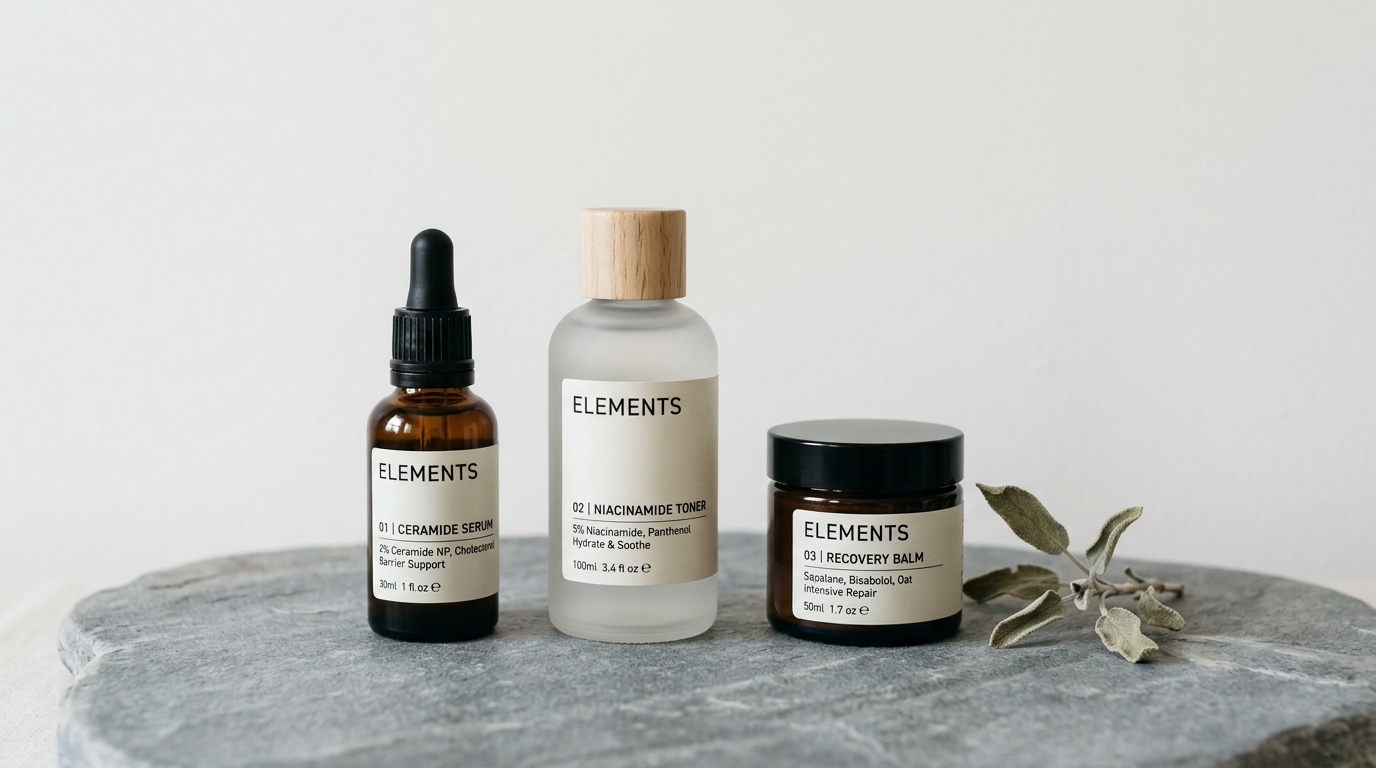
- Ceramides — replace the lipid "mortar" between skin cells. Look for ceramide NP, AP, or EOP in your moisturiser
- Niacinamide (vitamin B3) — stimulates your skin's own ceramide production and reduces redness
- Hyaluronic acid — draws and holds water in the upper layers, supporting hydration while the barrier rebuilds
Step 3: Book a Professional Barrier-Repair Facial
At Juvenelle, we offer facials specifically designed for compromised skin. These sessions use professional-strength ceramide and peptide formulations, gentle enzyme exfoliation (never acid-based when the barrier is down), and calming masks with centella asiatica or oat extracts. A single professional session can accelerate what takes weeks to achieve at home — and your esthetician can assess exactly how compromised your barrier is, which guides the repair timeline.
Step 4: Protect While It Heals
Wear SPF daily, even on cloudy days — a weakened barrier is more vulnerable to UV damage. Switch to lukewarm water for cleansing. If your environment is dry (and in London from October through April, it is), a simple humidifier in your bedroom makes a measurable difference overnight.
How Long Does Barrier Repair Take?
Most clients see noticeable improvement within two to four weeks of simplifying their routine and starting barrier-focused care. Full repair — where your skin can tolerate actives again and maintains hydration on its own — typically takes six to eight weeks.
The timeline varies depending on how long the barrier has been compromised. Someone who caught the signs early and pulled back on actives quickly may recover in under three weeks. Someone who pushed through months of stinging and irritation may need a full two-month recovery period with professional support.
Our estheticians at Juvenelle typically recommend two to three professional sessions spaced two to three weeks apart during the active repair phase, then a transition to maintenance facials once the barrier has stabilised.
Listen to What Your Skin Is Telling You
A compromised skin barrier is not a permanent condition. It's your skin communicating that something in your routine, environment, or lifestyle has exceeded its tolerance — and once you hear that message, the path back to healthy skin is surprisingly straightforward.
Simplify. Nourish. Protect. And if you're not sure where your skin stands, a professional assessment takes the guesswork out of it. Your esthetician can see and feel barrier health in ways that no mirror or selfie camera can capture.
Not Sure If Your Barrier Needs Help?
Book a skin consultation at Juvenelle Day Spa. Our estheticians will assess your barrier health, recommend the right repair approach, and help you rebuild a routine that works with your skin instead of against it.